Needle Drop Music: What It Means and What It Costs Editors
Needle Drop Music: What It Means and What It Costs Editors
A needle drop is one use of a pre-existing recorded piece of music in a film, video or advert. The name comes from lowering a record player’s needle onto a disc to play a track. In licensing, each separate use is counted as its own “drop” — and, historically, billed as one.
If you cut picture for a living, you probably met the phrase in an awkward place: on a cue sheet, in a licence quote, or in a price list that charged you again every time you added music. This page explains what the term actually means, the two ways editors run into it, and how to stop your music budget multiplying every time the edit changes.
Where the Term Comes From
The phrase is older than digital editing. In radio and early broadcast production, engineers pulled music from library records and physically dropped the needle onto the groove to play a cue. Each time the needle touched the disc, that was one use — one drop. Production-music libraries carried the idea into their billing: you paid per needle drop, meaning per instance of a track appearing in your programme. The technology changed; the accounting language stuck. Today “needle drop” survives as both a creative term and a licensing unit, even though no one is touching vinyl.
The Two Meanings Editors Run Into
There are two senses of “needle drop,” and mixing them up causes confusion on set and in the edit suite.
The creative sense is a recognisable song dropped into a scene for effect — the moment a familiar track kicks in and the room reacts. That’s a needle drop as a storytelling choice, and it sits opposite original score or underscore that sits beneath dialogue without pulling focus. The licensing sense is the billing unit: production libraries used “drop” to mean one metered use of a track. Same word, two different problems — one is about taste, the other is about paperwork and cost.
What You Need to License a Commercial Song
To drop a real, recognisable song into your edit, you need two separate permissions, not one. The first is a sync licence, which covers the composition — the song as written, controlled by the publisher and songwriters. The second is a master use licence, which covers the specific recording, controlled by the label or whoever owns that master. We break down both permissions, and what each one specifies, in our guide to the sync license.
Both are negotiated per use, and usually per media, per territory and per term — so the same song can cost differently for a regional web ad than for a worldwide broadcast campaign. That’s why hit songs are slow and expensive to clear: you’re negotiating with two rights holders who can each say no, and any single holdout stalls the whole cue. If you’re weighing this against library music, it helps to understand how royalty-free music licensing works before you commit.
Needle Drop vs Blanket Licence vs Buy-Once
Three licensing models dominate the work most editors do. A per-use (needle drop) model charges for every instance. A blanket model gives unlimited uses for a period or a single production. A royalty-free buy-once model gives you the right to use a track, paid a single time. The table shows how each behaves when the edit changes under you.
| Per-use (needle drop) | Blanket licence | Royalty-free buy-once | |
|---|---|---|---|
| What you pay for | Each separate use | A period or a single production | The right to use, paid once |
| Reusing the same track twice in one edit | Usually counts as two drops | Covered | Covered |
| Adding a cue late in the edit | Adds another charge | Covered within the terms | No extra charge |
| Cost predictability | Rises with every cue | Fixed for the term | Fixed forever |
| Paperwork | Cue sheet per drop | Blanket reporting | Keep the licence certificate |
| Who it suits | One-off broadcast use | High-volume production houses | Editors reusing music across projects |
How to Count Needle Drops in Your Edit
If you’re on a per-use licence, counting matters. The general rule: every separate start of a cue is one drop. A single track playing continuously under a montage is one drop. But a track that plays, stops, and returns later in the programme is usually counted as two — the music started twice. The trickier case is layering: if you stack the foundation, mid and top elements of the same piece so they play together, that’s one piece of music sounding, not several drops. Wording varies between providers, though, so before you lock picture, check your licence wording or ask the rights holder directly rather than guessing.
Cue Sheets in One Paragraph
A cue sheet is a list of every music use in your programme — track title, composer, publisher, and the exact timing and duration of each cue. Broadcasters, festivals and distributors often ask for one before they’ll accept a delivery, because it’s how music use gets reported downstream. It’s good practice to keep a cue sheet even for royalty-free music: it documents what you used and where, and it makes any later question about rights easy to answer. Keep it alongside your licence proofs for every project.
When a Needle Drop Is Worth It
Sometimes a real, recognisable song is the right call, and worth the clearance effort. When the audience’s existing relationship with the song is the point — the meaning it already carries, the era it summons, the irony of hearing it here — no library track can stand in for it. Period pieces lean on this. So do brand moments with the budget and lead time to clear both the sync and master sides. If the song itself is doing narrative work your score can’t, a needle drop earns its cost. Just start clearance early, because two rights holders can each hold up the whole thing.
When You Don’t Need One
Most editing work doesn’t need a famous song at all. Client videos, corporate pieces, documentary, YouTube, trailers — what these actually need is music that behaves like score: it holds a feeling for exactly as long as the scene runs, then shifts on your cue. That’s where the whole per-drop problem disappears. A one-time, royalty-free purchase means adding a cue or repeating a theme never adds a bill, so you can score to the story instead of to the invoice.
Duende Soundtrack Kits are built for exactly this. Each kit is organised into modular, key-matched layers — a low foundation of drones, pads and textures; a mid layer of rhythmic loops and chord progressions; a top layer of melodies and signature phrases; plus tonal design elements like hits, risers and transitions tuned to the same key. Because everything shares a key by design, layers stack and cross-fade without clashing, and you build the cue to the length of the scene rather than cutting a finished song to fit or paying for another drop. It’s all plain WAV and MP3 that drags straight into any editor, and the tagging by key and tempo lives in a free desktop app if you want it. If you want the deeper method, here’s how music stems and layering actually work in practice, and how to choose music that fits your edit instead of forcing the edit to fit the music.
Every layer you’re mixing here is pulled straight from our Moods and Emotional Ambiances series — finished cues you can also break down into stems. Press play, then hit New mix to reshuffle; it all stays in one key, so the layers never clash.
Grab the packs the mixer is pulling from:
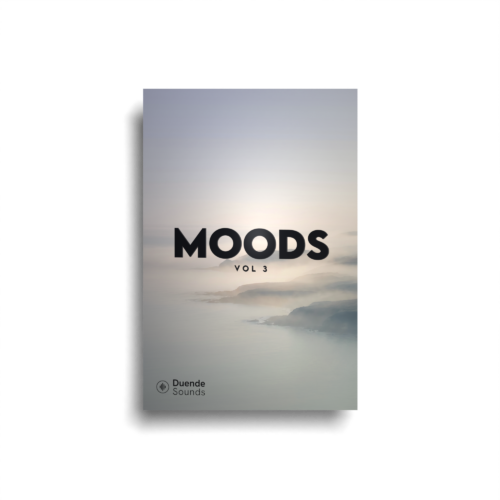
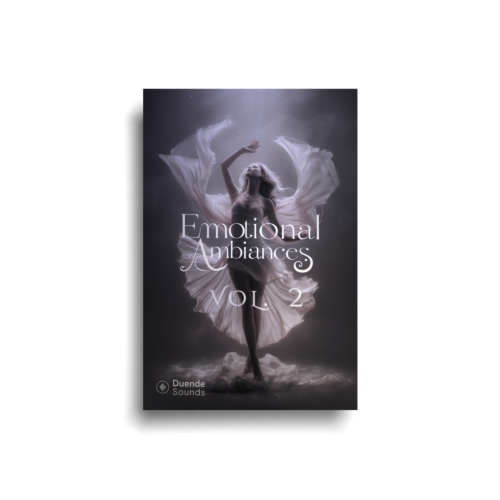
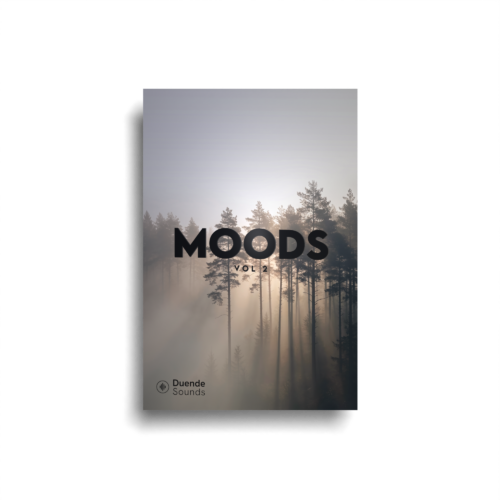
For most work, one of these mood-matched kits replaces the whole per-use headache — buy once, reuse across every client project, no per-drop fee.
Reach for these kits to build it:
Practical Checklist Before You Lock Picture
- List every music use in the edit, with its in and out timings.
- Confirm the licence type for each track — per-use, blanket, or buy-once.
- If any track is per-use, count the drops (a cue that stops and returns counts twice).
- Keep the licence certificate or proof of purchase for every track you used.
- Build a cue sheet, even for royalty-free music, and store it with the project.
- Prefer one-time licences for music you’ll reuse across client work, so tomorrow’s edit doesn’t add today’s bill. Skip the recurring costs of royalty-free music without a subscription, and keep a sound glossary handy for any term you hit on a cue sheet.
Frequently asked questions
What is a needle drop in film?
What does needle drop mean in music licensing?
Is a needle drop the same as a sync licence?
How are needle drops counted in a video?
What is the difference between a needle drop and a blanket licence?
Do I pay a needle drop fee for royalty-free music?
The short version: a needle drop is one metered use of an existing recording, and per-use billing punishes exactly the thing editors do most — reuse and revise. Score with modular, key-matched layers you own outright, and the meter stops mattering. Browse the Soundtrack Kits and build your next cue to the scene, not the invoice.